How construction supply chains win with on-demand delivery

The construction industry, across all sectors, shows no signs of slowing down. And that means the distribution market is more competitive than ever. Project teams are looking to partner with businesses that can deliver more, on time, and faster than before. For distributors using conventional delivery logistics, it means potentially losing clients to competitors who can rise up to the challenge.
Here’s why on-demand delivery could be the difference between scaling your business or not. Plus, ways to make rush delivery accessible and flexible, without it eating into your bottom line.
How do conventional construction delivery logistics work?
Construction distributor delivery logistics are complex. They involve planned, coordinated moves to deliver on time within limited windows. The goal is to get materials where they need to go and ultimately prevent delays. It typically requires detailed planning and coordination among many stakeholders across departments.
When it comes to the actual planning, there’s no “right” way to do things. Operations typically involve coordinating the right vehicles with the proper drivers and delivery times. Some distributors use software systems to plan deliveries, while others use simpler tools (think Excel sheets). Some, however, are still using a pen-and-notepad method. Delivery logistics are one of the last areas to get the tech upgrade it desperately needs, because many businesses run on an “if it ain’t broke, don’t fix it” model.
But here’s why delivery logistics are indeed broken for many.
How construction demand has shifted supply chains
Rising construction demand has forced the supply chain management industry to evolve from fragmented, traditional models to advanced, agile systems. Price volatility, unexpected tariffs, labor shortages, government shutdowns, and other disruptions mean businesses need to turn on a dime and completely revamp their supply chain strategies.
This means the old system of having trucks show up unexpectedly, with no visibility into delivery status and no confirmation of delivery completion, makes things exceedingly difficult for both the distributor and the end customer. And without elastic logistics, the ability to grow and shrink their fleets to meet demand quickly, delivery is both rigid and ill-suited for the workload. That’s where on-demand delivery comes in.
Why on-demand delivery is the future
On-demand delivery of construction materials, these days, isn’t just a leg-up on the competition; it’s an expectation. Companies expect distributors to deliver the same day in many cases and account for it in their project plans. It also:
- Maintains project schedules: Timely, on-demand delivery keeps work uninterrupted, preventing costly delays.
- Maximizes labor use: Having the right materials on hand when needed means contractors and skilled tradespeople can focus on their on-site work rather than leaving for a supply run.
- Reduces waste and excess inventory: An on-demand model minimizes the need for on-site storage. This means costs are reduced, and the risk of theft or material damage is reduced.
- Enhances efficiency: On-site workers can also address unexpected equipment or material shortages by placing a simple rush order when needed.
The on-demand solution? Flexible 3PL software like Curri
Curri, to put it simply, does what conventional couriers can’t. It’s a comprehensive logistics platform that turns fragmented, siloed logistics into an on-demand solution built specifically to optimize supply chains.
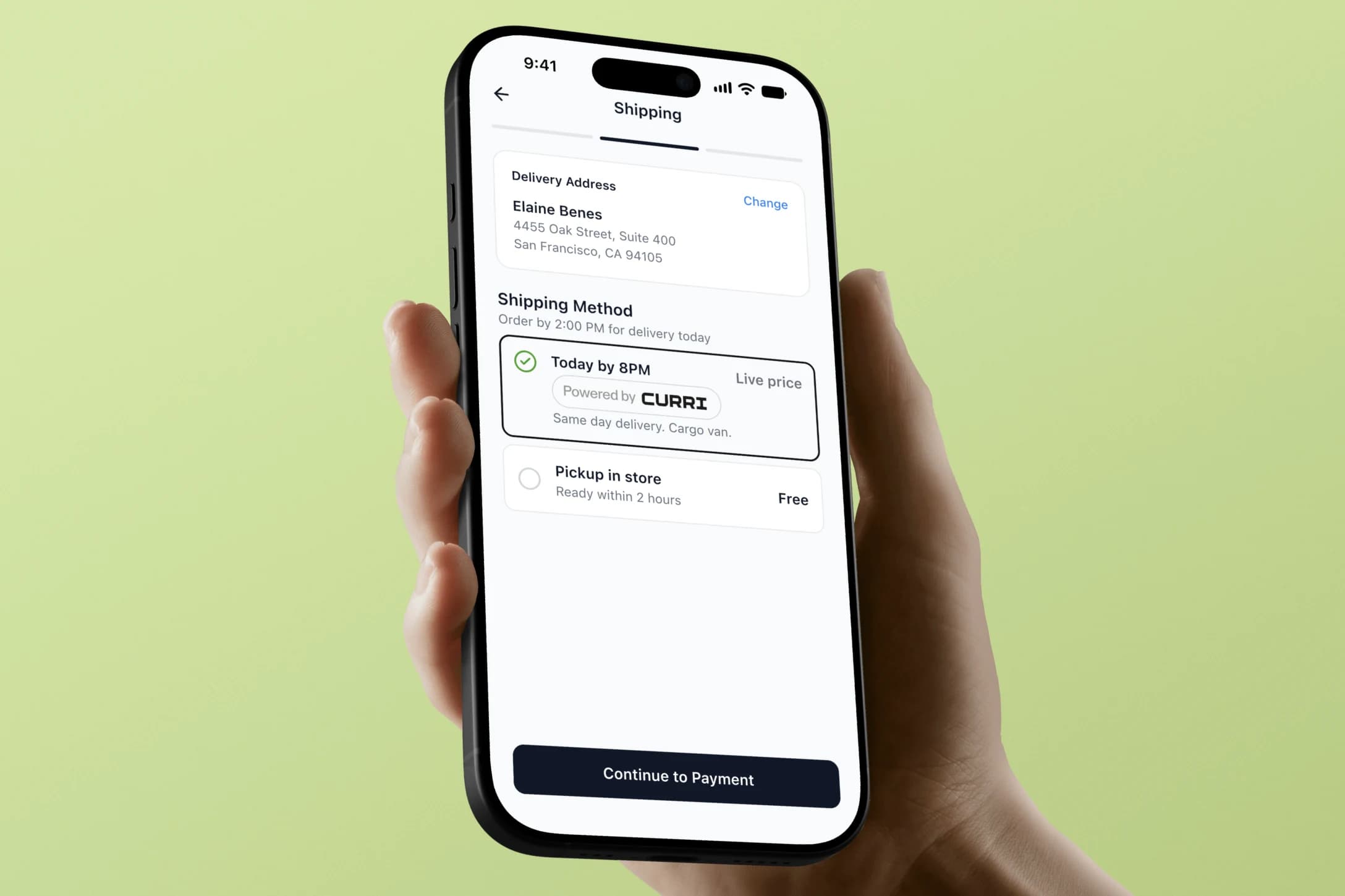
Where many businesses rely on ad-hoc courier calls and internal fleets already stretched thin, Curri gives distributors full access to a nationwide fleet of drivers. Jobs and routes that used to require multiple phone calls, unclear ETAs, and manual planning can now be booked in a few minutes and a few clicks. Plus, the pricing is transparent, app updates are automatic, and everyone on both sides of the supply chain gets consistent reliability.
Curri, unlike many solutions, offers hotshot delivery. These are straightforward, point A-to-B routes that cut out the middlemen without driving up delivery costs. Users can book rush hotshots for deliveries as quickly as that day, or schedule them a few days out to enjoy peace of mind all week.
On-demand delivery, plus more
Yes, Curri’s rush deliveries and hotshots can get you on-demand deliveries. But users keep coming back to Curri time and time again for the full suite of features. Live-tracking is a game-changer: Bookers get a tracking link with insight into exactly where their shipment is on the road, and they can share it with other stakeholders for ultimate visibility. Users can even opt in to push notifications to stay in the loop while focusing on other things.
Curry also offers live traffic forecasting and an intuitive route planner, giving users simple drag-and-drop or AI-automated routes, taking the headache out of planning. It’s data-driven automation that you can trust to optimize your routes every time.
Curri vs. conventional couriers, head to head
Looking for the quick feature and service breakdown? Here’s how Curri compares to conventional delivery logistics systems.
| Category | Curri (On-demand 3PL) | Conventional Delivery Logistics |
|---|---|---|
| Scalability & Flexibility | Very high: Curri uses a nationwide, elastic driver network. | More rigid: Requires committing to fixed contracts or capacity; scaling often means adding owned/leased assets with long contracts. |
| Speed / Responsiveness | Fast, with multiple service tiers: Scheduled, Rush, Same-Day (hotshot) delivery. | Slower or less flexible: Many traditional couriers work on fixed schedules; last-minute or high-priority jobs are costly. |
| Fleet Selection | Very broad: From sedans to flatbeds, semis, vans; includes specialized trucks. | More limited: Depending on the logistics provider, access may be limited to standard freight or courier vehicles, with less on-demand flexibility. |
| Fleet Coverage | Nationwide network, including local drivers; 24/7 availability. | Often regional; capacity constraints may apply, especially for non-standard or job-site deliveries. |
| Visibility & Tracking | High: Real-time tracking, proof of delivery (photos, signatures), integration with construction software. | Lower: Traditional couriers sometimes offer tracking, but often lack job-site–specific visibility. |
| Cost Efficiency | More efficient: Reduces need to maintain own fleet, cuts idle costs, optimizes resources. | Less efficient: Fixed resources, under-utilized vehicles, and lower flexibility can drive up cost per delivery. |
| Reliability for Construction | High: Built specifically for construction & industrial supply. | Moderate: General courier services may not understand construction-specific needs, leading to missed or inefficient deliveries. |
Get started with Curri today
Whether you’re based in Washington, Phoenix, or Philadelphia, Curri is there for your business. Book hotshots, dedicated service, LTLs, FTLs, or even parcel delivery. Curri also automatically matches you with the most efficient vehicle, helping you reach your sustainability goals with ease.
Book a demo with our team today to learn more and get started with on-demand delivery logistics.