The most common causes of job site material delays (and how to fix them)


In the construction industry, delays are inevitable. But if there are ways to cut out delays when possible, project owners and distributors would jump at the chance. In this article, we’ll cover the top 7 reasons material deliveries get delayed, and how to stop a stall before it happens.
What kinds of materials are most consistently delayed?
While there’s no surefire construction material that guarantees a delay, some materials are more likely to experience delays than others. Specialized materials and structural components are two examples.
Materials such as finishes, custom windows and doors, electrical switchgear, and HVAC equipment often have longer lead times, which are further exacerbated by supply chain disruptions and high demand.
The top 7 reasons job site materials are delayed
1. Poor or inaccurate scheduling
A major cause of delays for many businesses is poor scheduling. Many book their deliveries too early, too late, or without coordination between stops. When the timing isn’t right in the delivery sequence, dispatch crews wait idly or are forced to replan their day.
Miscommunication between distributors and job-site receivers often creates gaps or overlaps. Even minor inaccuracies in delivery timing can snowball into hours or days of lost productivity. For example, bookers could schedule a pickup for after the store is closed, requiring the delivery to be rescheduled.
2. Traffic, route inefficiencies, and driver shortages
Road closures, reroutes, accidents, and heavy traffic can disrupt even the most meticulously planned routes. Many distributors rely on manual route planning or the driver’s personal expertise of local roads. This means inconsistent travel times and unreliable ETAs. Limited driver availability, especially during high season, will also slow down deliveries.
3. Wrong vehicle type or insufficient fleet capacity
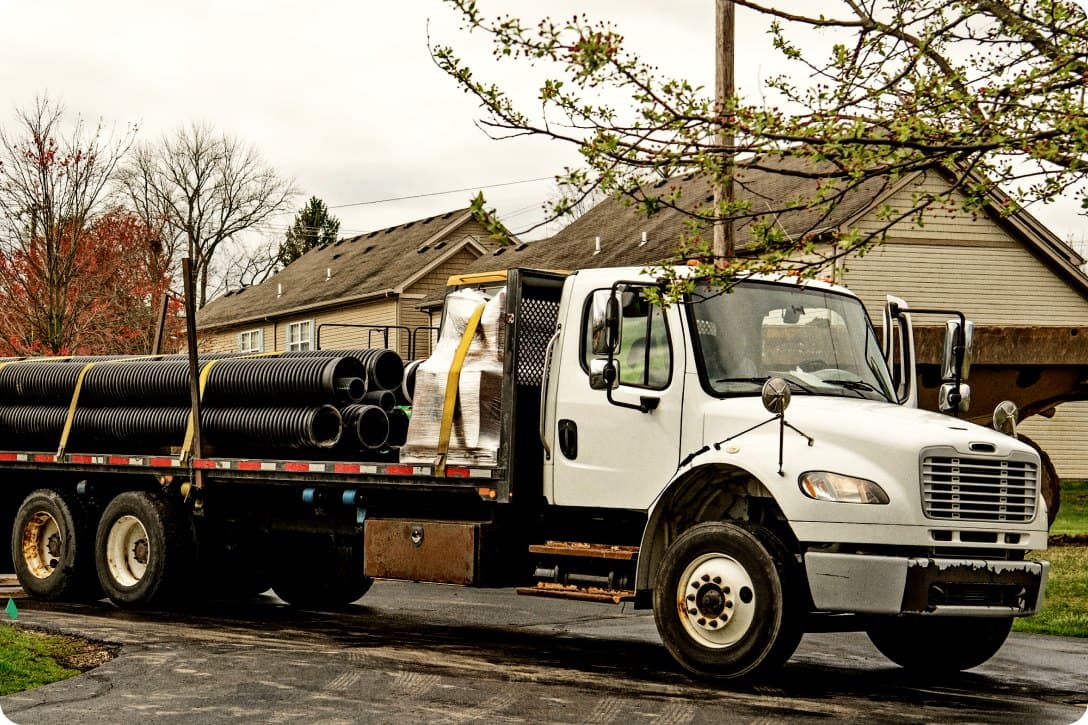
If the delivery requires specialized handling or a particular vehicle, like a box truck or flatbed, it could mean the distributor has to play the waiting game. Using the wrong vehicle, instead of waiting for the appropriate one, can also lead to partial loads, split deliveries, or failed delivery attempts.
When the distributor’s internal fleet is stretched to capacity, oversized and urgent orders are occasionally bumped to later windows without notice. The mismatch between fleet size and vehicle availability could mean all the team's route planning was for naught.
4. Incomplete, missing, or incorrect orders
Occasionally, the delay begins before the truck is even en route. The driver picking up the order could miss key items or load and pack things improperly for transport. When receiving crews discover this on the job site, someone has to pick up the phone and confirm the mistake with the distributor, which will cause a reorder and delay work.
These misdeliveries and material shortages also create a ripple effect that slows site progress across multiple trades. Errors in accuracy can derail entire schedules and cause distrust in the responsible distributor.
5. Jobsite access challenges
Remote job sites, congested delivery zones, and urban areas all create logistical challenges. Drivers may not know where to enter, or enter the wrong area, the contact person on arrival may be unavailable, and parking can be a guessing game, causing some drivers to turn around and reattempt delivery for a later window.
On top of that, when the site lacks the proper equipment to unload efficiently, drivers are at a standstill. Weather, tight turns, mud, or blocked off access points can also cause a delivery that should take minutes to stretch into hours.
6. Last-minute changes or unplanned needs
Project timelines are always dynamic. Sudden changes, such as an equipment failure, missing material, or an accelerated schedule, can increase delivery urgency. When distributors lack agile logistics or on-demand shipping options, urgent requests become a bottleneck.
Crews typically pause work entirely until the right delivery arrives. Unplanned turnaround needs are common, but they don’t have to be a given.
7. Communication breakdowns
When field crews, contractors, and dispatchers aren’t on the same page, delays feel like a guarantee. Unclear instructions, outdated delivery windows, missed phone calls, and buried emails can leave stakeholders of all kinds guessing.
Without proper visibility, receivers may step away from the dropoff area when they’re needed, meaning a failed or delayed dropoff. Miscommunication is arguably the easiest thing to fix, but when it isn't, it leads to task duplication, avoidable rework, and endless frustration.
The fix: Flexible 3PL solutions like Curri
Curri is a flexible, comprehensive logistics solution that prevents delays before they can surface. It enables distributors to respond quickly to construction’s unpredictable requests and urgent needs. Instead of relying on a rigid in-house driver fleet, distributors can use Curri to access a nationwide fleet of sedans, cargo vans, flatbeds, and specialty vehicles on demand.
Route planning is a breeze thanks to Curri, which instantly matches the delivery type to the right vehicle and driver. Curri also offers live tracking while a shipment is en route, and users can share the link and opt in to push notifications so every stakeholder gets the updates they need. Curri’s intuitive route planner also allows bookers to drag and drop deliveries onto a driver’s route or use the AI-powered planner to schedule deliveries in advance. Here’s how Curri compares to conventional delivery drivers:
| Category | Curri (On-demand 3PL) | Conventional Delivery Logistics |
|---|---|---|
| Scalability & Flexibility | Very high; Curri uses a nationwide, elastic driver network, so you only pay for what you need. | More rigid; conventional logistics require committing to fixed contracts or capacity, scaling often means adding owned/leased assets or long-term carrier agreements. |
| Speed / Responsiveness | Fast, with multiple service tiers: Scheduled, Rush, Same-Day (hotshot) delivery. | Slower or less flexible; many traditional couriers work on fixed schedules. Last-minute or high-priority jobs can be more difficult and costly to expedite. |
| Fleet Variety | Very broad: from sedans to flatbeds, semis, vans (includes specialized trucks like lift gate, pipe racks, etc.). | More limited; depending on your logistics provider, you may have access to standard freight or courier vehicles, but less on-demand access to very specialized or small-scale delivery. |
| Coverage | Nationwide network, including local drivers; 24/7 availability. | Often regional or national, but capacity constraints may apply, especially for non-standard or job-site deliveries. |
| Visibility & Tracking | High: Real-time tracking, proof of delivery (photos, signatures), integration with construction software. | Lower: Traditional couriers may offer tracking, but often lack the same job-site-specific visibility, especially for construction or specialty handling. |
| Cost Structure | Pay-as-you-go: On-demand drivers reduce the costs of owning vehicles or a fixed fleet. | Higher fixed costs: May require dedicated contracts, fixed routes, or keeping a fleet; less flexible for fluctuating demand. |
| Supply-Chain Integration | Strong: Can integrate into construction software tools (BIM, project management, ERP) to streamline jobsite logistics. | Often siloed: Traditional logistics systems may not integrate tightly with construction-specific systems, reducing coordination efficiency. |
| Exception / Delay Management | Built-in: Platform supports intelligent matching and exception management (rerouting, delay handling). | Weak: Changes in inventory, site conditions, or schedule require manual coordination (calls, emails), which can delay problem resolution. |
| Cost Efficiency | More efficient: Reduces the need to maintain an in-house fleet, lowers idle costs, and optimizes resource utilization. | Less efficient: Fixed resources, underutilized vehicles, and limited flexibility can drive up the cost per delivery. |
| Reliability for Construction | High: Explicitly built for construction & industrial supply, with job-site delivery, appropriate vehicle types, and reliable drivers. | Moderate: General courier services may not understand construction-specific requirements, resulting in missed or inefficient deliveries. |
Get started with Curri today
Don’t let delays slow your timelines or make you lose business. Try a flexible, cost-effective fleet like Curri’s to deliver on-demand when duty calls. Whether you’re based in Philadelphia, Washington, or Phoenix, we’ve got everything you need in simple, scalable logistics.
Book a demo today to learn more and get started.