Direct-to-consumer delivery: Why retail brands use van fleets to outdeliver the competition

Direct-to-consumer (DTC) delivery is now a core growth strategy for retailers looking to scale, driven largely by customer demand. Customers expect their deliveries to be perfect and almost instant. Next-day delivery is considered slow in many cases, and same-day delivery is the new baseline, thanks to particular online retail giants.
The problem is, for retailers operating at scale, the last mile is often the most costly and operationally complex part of the supply chain. To meet customer expectations while controlling costs, many retailers are revamping their last-mile strategies. Nationwide van fleets have since become the preferred model for DTC delivery, particularly for multi-location retailers selling appliances and technology, furniture, building materials, and other specialty or oversized items.
The evolution of direct-to-consumer delivery in retail
Once upon a time, DTC delivery was limited to small parcels and niche ecommerce. But today, it’s an important channel for retailers looking to stay competitive and scale. There have been numerous drivers contributing to the change:
- Customer demand: This is the biggest driver for more DTC delivery. Consumers want their items shipped and delivered ASAP.
- Ship-from-store: Retailers are increasingly opting to ship from stores versus warehouses and distribution centers, meaning last-mile has to be much more flexible.
- Order variation: Product assortments including both small and bulky items mean retailers need a dependable one-stop shop for DTC shipping.
- Control: Brands want better control over order status visibility and the overall customer experience.
These factors have made limitations in long-haul trucking and parcel service more apparent than ever. Here’s exactly how they miss the mark.
Where conventional last-mile options fail DTC brands
Parcel carriers and many crowdsourced delivery providers are not designed for the modern retail strategy. While of course, they can deliver a small package from point A to B, they fail to meet the turnaround times a DTC brand needs at scale.
Other common challenges include inconsistent service levels, poor handling of bulk or specialty items, limited branding opportunities, and unpredictable (and steep) pricing in peak demand. For those with high-volume delivery across hundreds or even thousands of locations, these challenges quickly eat into margins and erode brand loyalty.
What makes van fleets ideal for DTC delivery
This is where the van fleet comes in. Van fleets are built for flexible, reliable DTC delivery. Some of the advantages include:
- Supporting oversized or bulky delivery
- Supporting deliveries that require special handling
- Access to trained, vetted drivers serving multiple markets
- Support for branded last-mile delivery
- More cost-effective, predictable economics for large-scale retail delivery
Van fleets can divide and conquer in ways conventional carriers fail to. They save businesses from having to manage expensive internal fleets and provide an elastic strategy that lets them grow or shrink fleets as needed.
Why nationwide coverage makes all the difference
DTC brands typically operate across tens or hundreds of locations. If that means managing separate delivery providers in every market, it also means a giant hassle and operational drag. A nationwide van fleet, however, provides standard service across any market, centralized performance tracking and reporting, simplified vendor management, and availability during seasonal surges.
Also, if demand for your products spikes unexpectedly in one region but not in another, your nationwide coverage means you can reach customers when they need you most.
Seasonal surges are never a problem for the van fleet
Speaking of demand, even when you expect it to go up, say around the holidays, retailers can still run into issues. Parcel carriers could be tied up, there could be longer wait times with crowdsourced apps, and surcharges can quickly run up budgets.
But van fleets offer stable availability and coverage. The dedicated capacity means retailers get predictable service and pricing, effectively eliminating disruptions experienced with conventional couriers.
How Curri powers reliable van fleets for DTC brands
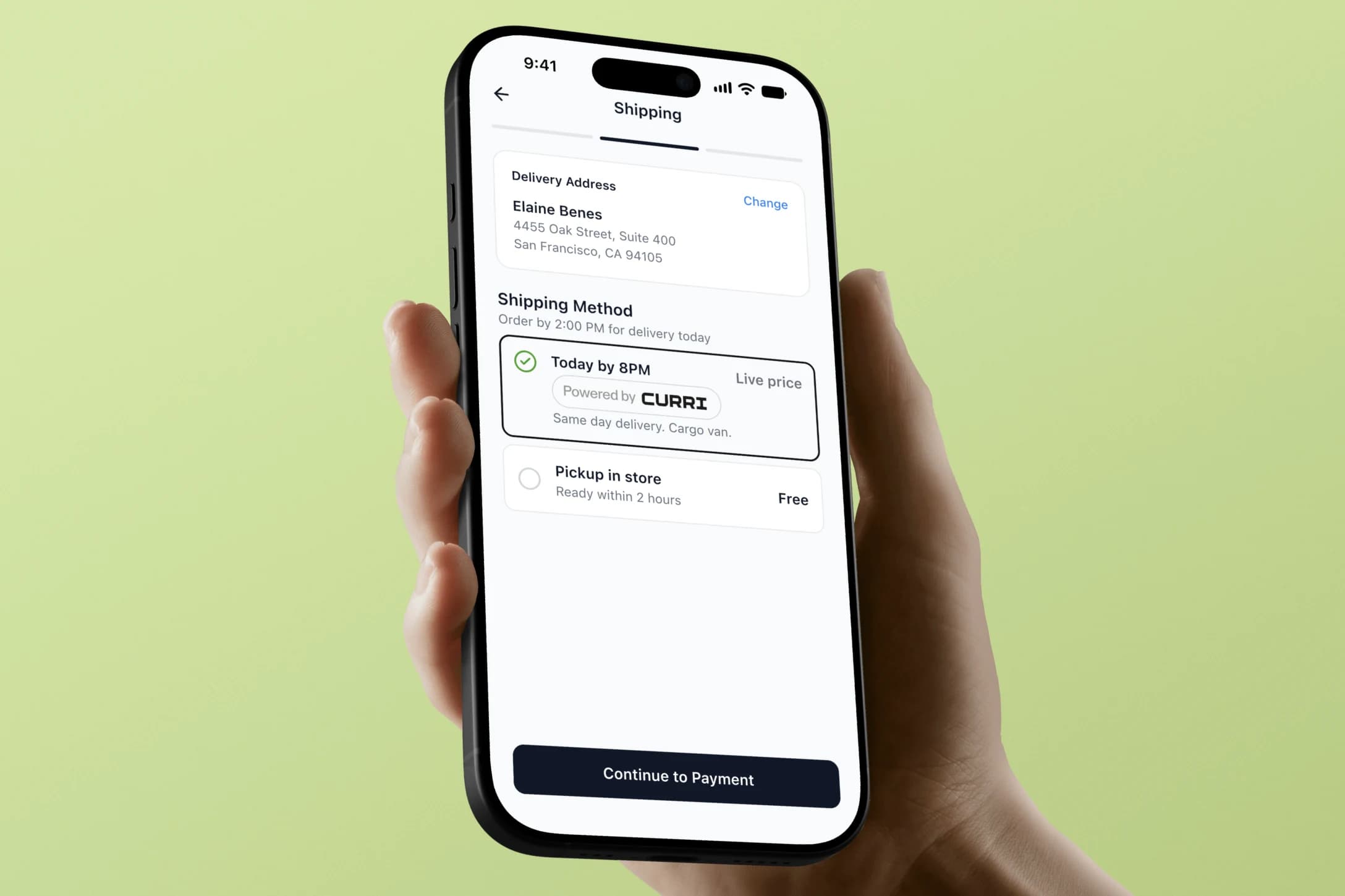
Curri is a unified logistics platform connecting retailers and DTC brands to a nationwide van fleet they can trust. On a single platform, Curri users can book, track, and optimize last-mile logistics to meet customer demand without breaking the bank. Curri supports:
- Live-tracking and proof of delivery for bookers and customers
- Push notifications for additional visibility
- Dedicated account managers
- An intuitive route planner for the most effective, sustainable routing
- Traffic forecasting optimized planning
- Vetted, professional van drivers
- Flexible capacity to shrink or grow fleet size instantly
- A consistent customer experience across the United States
Curri drivers are also equipped to handle bulk or oversized items, as well as deliveries with special handling requirements. Users are also matched with the right vehicle and driver every time, meaning DTC and retail brands can skip the hassle and leave the details to Curri.
Here’s the breakdown of how Curri compares to conventional last-mile couriers:
| Category | Curri | Traditional Carriers |
|---|---|---|
| Delivery Speed | Same-day and next-day capable | Typically next-day or longer |
| Same-Day Delivery | Ideal for same-day retail delivery vans | Limited by fixed cutoffs and hub schedules |
| Scheduling | Supports precise delivery windows and easy booking | Limited or unavailable scheduling. Often phone calls, emails, or outdated software |
| Handling & Damage Risk | Better handling for oversized items | Higher damage risk for large or fragile items |
| Customer Experience | Retailer-controlled, branded delivery | Carrier-controlled experience. Limited visibility for retailers |
| Flexibility | Routes and capacity adjust in real time | Fixed routes and processing times |
| Scalability | Flexible capacity via platforms or partners | Scales well for parcel volume, less flexible locally |
| Cost Considerations | Lower total cost for large or complex orders | Lower per-package cost, higher hidden costs for failed or damaged deliveries |
Try Curri and get a reliable fleet for DTC growth
DTC delivery isn’t going anywhere, and same-day delivery is already a primary revenue channel for all the largest retail players. A third-party van fleet provider like Curri is the most effective way for brands to meet customer demands, streamline operations, and grow cost-effectively.
If your business is considering launching a van fleet for DTC delivery, see a demo with Curri today. We also support LTL and FTL shipping, rush hotshot delivery, dedicated service, and more. It’s time your business nails last-mile delivery to outdeliver the competition.