How to choose the right route planner for your van fleet


If you manage a van fleet for a medium to enterprise business, we don’t need to tell you that technology is key. The right tech will boost fleet performance as margins tighten, saving the business seemingly endless overhead.
But what does that technology look like? It likely covers scheduling, driver salary, and proof of delivery if you’re lucky. Route planners are the underrated piece of tech your growing business might be missing. By optimizing your fleet's routes, you reduce maintenance and fuel costs, increase visibility, streamline dispatch, and improve operational sustainability.
Whether you’re managing a retail or construction fleet, choosing the right route planning software can be tricky, as no two tools are built the same. But here’s what you need to know so you can choose the right solution and start dispatching smarter.
Start by assessing your delivery model
Before we get down to comparing features head-to-head, it’s important that you assess your current daily fleet operations. Some fleets run routine, multi-stop routes and plan well in advance, while many others handle same-day orders, or route drivers across multiple regions from several hubs. The point is that your delivery model should guide your route-planning evaluation. Discuss with your team:
- How many routes are same-day, and how many are scheduled?
- How often do orders change once shipped?
- Do you use warehouse or store-to-customer delivery?
- Are delivery windows mostly fixed or flexible?
- How dense are your delivery zones?
And lastly, what your future growth plans are. You need a route planner that supports your operations today and remains reliable as you scale.
Look beyond static route planning
Many route planners on the market today support only predefined warehouse-to-store shipments. While handy in some use cases, real-world delivery rarely unfolds according to plan. Order cancellations, traffic delays, road closures, customer rescheduling, and other fulfillment bottlenecks can quickly disrupt even the most meticulous plans.
So when you’re shopping around, consider the route planner’s ability to pivot in real time. Dynamic routing capabilities may include live tracking and rerouting, real-time dispatch adjustments, driver communication tools, traffic forecasting, and more.
For retail van fleets handling same-day fulfillment in particular, live visibility is often just as important as the initial route optimization.
Route planning for any workflow and delivery type
Route planners rarely operate in isolation, and you wouldn’t want them to. A great route planner should integrate with other delivery logistics systems and, even better, support managing all your go-to carriers in one place.
When evaluating route planners, you also want to ensure they support multiple delivery types. Same-day hotshots are a common request, but LTL, dedicated, and even parcel services come in handy for businesses in many industries. If the route planner you have your eye on only supports one type of delivery for your fleet and doesn’t integrate with the rest of your workflow, it might be more trouble than it’s worth.
Scaling: Does the route planner fit with your plans for the future?
Your van fleet route planner needs today could very well look different a year from now. As delivery volume grows, service areas expand, or you pivot into different offerings, your route planner should be with you every step of the way.
Retailers, in particular, should consider forecasted delivery volumes, location expansion, and their growth strategies to stay a few steps ahead.
Make sure data drives performance
Data visibility is a key advantage of route planning software. The right platform should provide insights that help you streamline and continuously improve your operations. Look for reporting on:
- Fuel usage
- Driver idle and active time
- On-time performance
- Fleet costs
- Driver efficiency
Adapting and evolving is key for long-term growth, and the best route planners will arm you with the data you need.
Balance cost against operational value
Pricing models for route planners, like other features, vary widely. Some charge per vehicle, and others charge per user or per route. While cost is, of course, important, it should be weighed against operational impact.
Lower-cost tools may sound enticing, but they likely lack dynamic or full-suite capabilities. Higher-end tooling may feel risky, but it may unlock operational savings, lower fuel costs, and deliver service improvements that more than justify your investment.
The goal here isn’t to find the cheapest route planner, but it’s also not to break the bank. Make sure you weigh the cost of the tool against the ROI your van fleet will realize in the short and long term.
Where high tech meets cost-effective with Curri
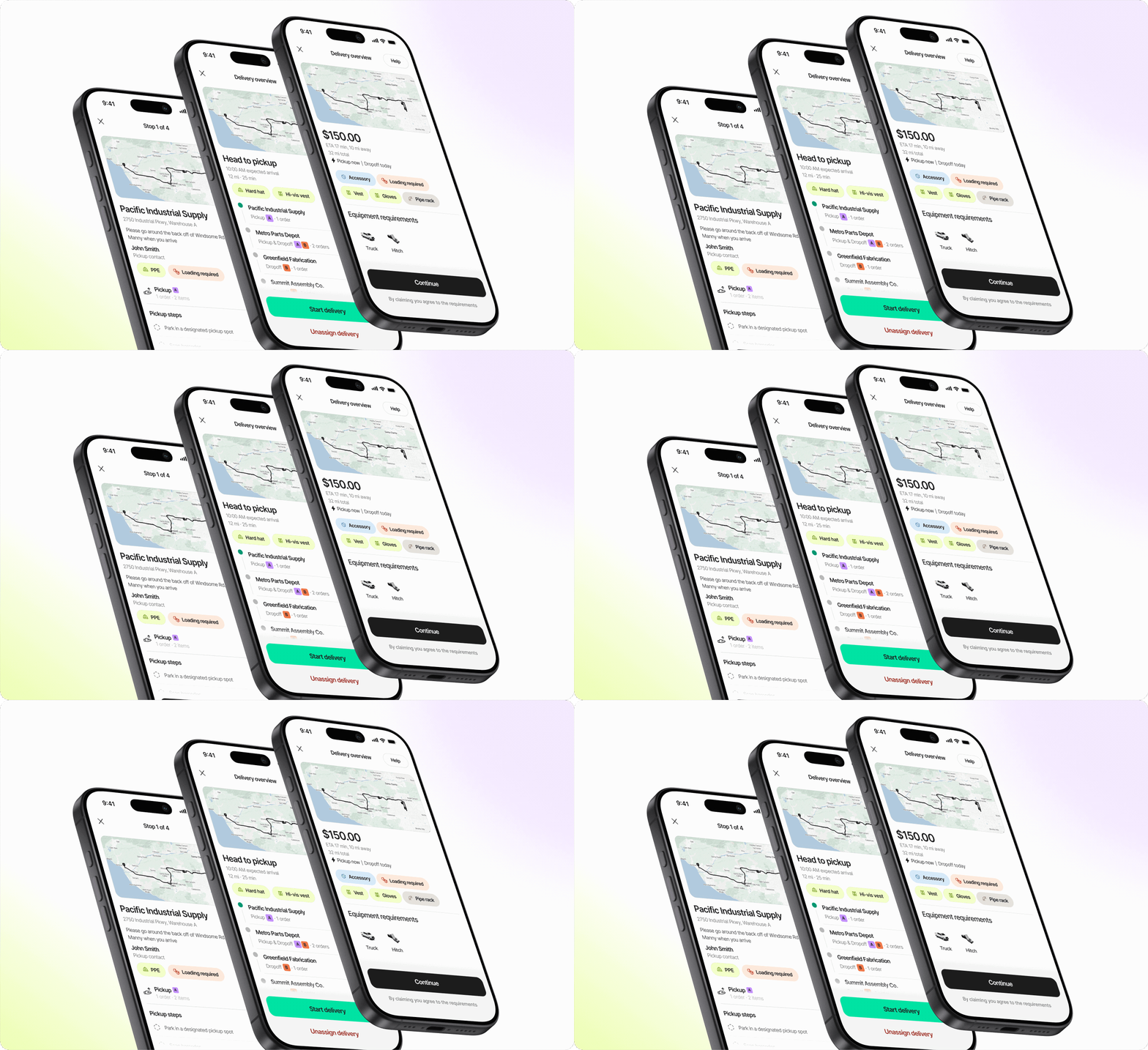
Curri is a comprehensive logistics solution that blends traditional routing software and real-time delivery orchestration. Curri’s Route Planner supports pre-planned and same-day deliveries, adjusting easily to customer demand and spikes in shipments. For retail van delivery, this is especially valuable. Customers expect stores to deliver same-day, and it’s a must to stay competitive.
The best part? Route Planner is easy to use. Gartner just awarded Curri the 2026 Best Ease of Use badge for Route Planner, and users can navigate the tool just like they would a food delivery app. There are simple, intuitive functions like drag-and-drop, and highly advanced and automated ones, like the AI-powered autoassign. Essentially, scaling your van fleet stays simple.
On top of that, it’s cost-effective. Curri offers SmartMatch, where users can upload a quote from a competing carrier, and Curri will match or beat it. Instead of shopping around third-party vendors for the lowest price, users can go with Curri for the best functionality on the market without worrying about running up the budget.
Try Curri today
Choosing the right route planner for your van fleet isn’t just a technology decision. It’s an operational strategy that impacts cost, the customer experience, and the business’s ability to scale.
The best route planner aligns with your delivery model, supports multiple delivery types, scales with growth, and doesn’t bloat the budget. For businesses in any industry, Curri is the perfect fit. See a demo from the Curri team and get the tooling that’s simple, powerful, and ready to grow with you for the long haul.