Should retailers use route planners for their van fleet? The pros and cons

As customer delivery expectations continue to rise (ie, same-day service), most operations teams are reexamining how they manage their van fleet. Tight delivery windows, faster fulfillment, and a “deliver now” mentality are driving many retailers to seek tooling that delivers efficiency and control. A common solution? An intuitive route planner.
Route planning software isn’t new. It’s long been used to optimize routes, reduce mileage, and improve driver productivity. But van fleets and last-mile strategies have changed in recent years, so what worked 5 or even 3 years ago may no longer be sufficient today. The best route planners in 2026 are more user-friendly and data-driven than ever, leveraging a clean interface and AI capabilities. Here’s what you need to know about the benefits and tradeoffs of today’s route planning software.
What’s a route planner for van fleets?
A route planner is software that determines the most efficient route and stop sequence for delivery vehicles. These tools factor in delivery windows, distance, traffic, travel time, and stop locations. They build routes in advance, often allowing users the flexibility to edit and adjust before finalizing. For van fleets in particular, route planners are used to:
- Assign routes to specific drivers
- Optimize drop-off order and minimize miles driven
- Estimate delivery times for end customers
- Provide drivers with turn-by-turn directions
For retailers, route planners are often used to support scheduled deliveries, last-minute orders, high-stop dense routes, and predictable fulfillment patterns. Some use a route planner baked into their internal logistics, while others partner with a third-party provider that offers an in-app route planner.
How route planning software is used for today’s retail van fleets
Retail van fleets rely on route planners for just about everything. When delivery volume is stable, and demand can be forecasted ahead of time, they help dispatchers run like a well-oiled machine. This could include regional distribution runs, recurring inventory replenishment, or pre-planned multi-stop customer routes.
And when demand spikes unexpectedly, route planners help teams strategize who to send where, when, and in what path to best meet customer expectations. Because route planners account for traffic forecasts, weather, stop efficiency, and delivery windows, they work for both recurring and ad hoc deliveries.
But no two route planners are built alike. Here are the general pros of employing a reputable one.
Pros of route planners for van fleets
For retailers of any scale, and especially those with hundreds or thousands of stores, route planners can deliver meaningful value. Key advantages include:
- More efficiency for routine routing: Route planners excel at evolving and optimizing regular, repeated routes. Retail van fleets with defined territories and known stops will see reduced fuel and driving time quickly.
- Lowering operational costs: Route planners minimize unnecessary miles and idle time, giving businesses more control over vehicle wear, labor, and fuel expenses.
- Easy onboarding: Working with a third-party provider, especially, means no need to hire, onboard, and manage an internal fleet. Businesses can already hire professional drivers who are up to speed in a few clicks or taps.
- Meeting customer expectations: Well-planned routes deliver more accurate arrival estimates that can be shared internally and with customers. This improves internal visibility and builds customer trust.
Van fleet route planner cons
Despite their obvious strengths, route planners for retail fleets have a few drawbacks.
For one, not all route planners have the functionality required to do the job well. Those that lack traffic forecasting and AI optimization, and fail to provide visibility to bookers and customers, may be more frustrating than helpful. For retailers with hundreds of orders going out daily, it can be a clunky process, requiring too much human oversight.
Another consideration is prioritization. A good route planner will choose the optimal path every time. But when there are high-priority customers that need their order first, a route planner, on its own, won’t know how to prioritize one-off VIP clientele.
When route planners make sense for retail van fleets
For retailers, route planners are the best fit during periods of growth. Many retailers are taking on a ship-from-store strategy, making it easier for customers to order on demand with same-day delivery. To meet those “must have now” expectations, you need a surplus of vehicles to cover a lot of ground in the most efficient way possible. Especially for customers in rural areas or bustling, dense metro areas.
It’s also a great time to try a route planner when looking to reduce or eliminate your internal fleet, grow your delivery radius, or just cut operational costs. Third-party platforms bring route planners and drivers to businesses. So internal fleets with sick days, onboarding, and limited delivery coverage no longer have to be a hassle for businesses.
Curri: A smarter approach to retail van fleet delivery
Route planners for retailers at any scale? This is where Curri comes in. Rather than forcing retail van fleets into rigid routes and operations, Curri focuses on strategies that adapt and evolve in real time.
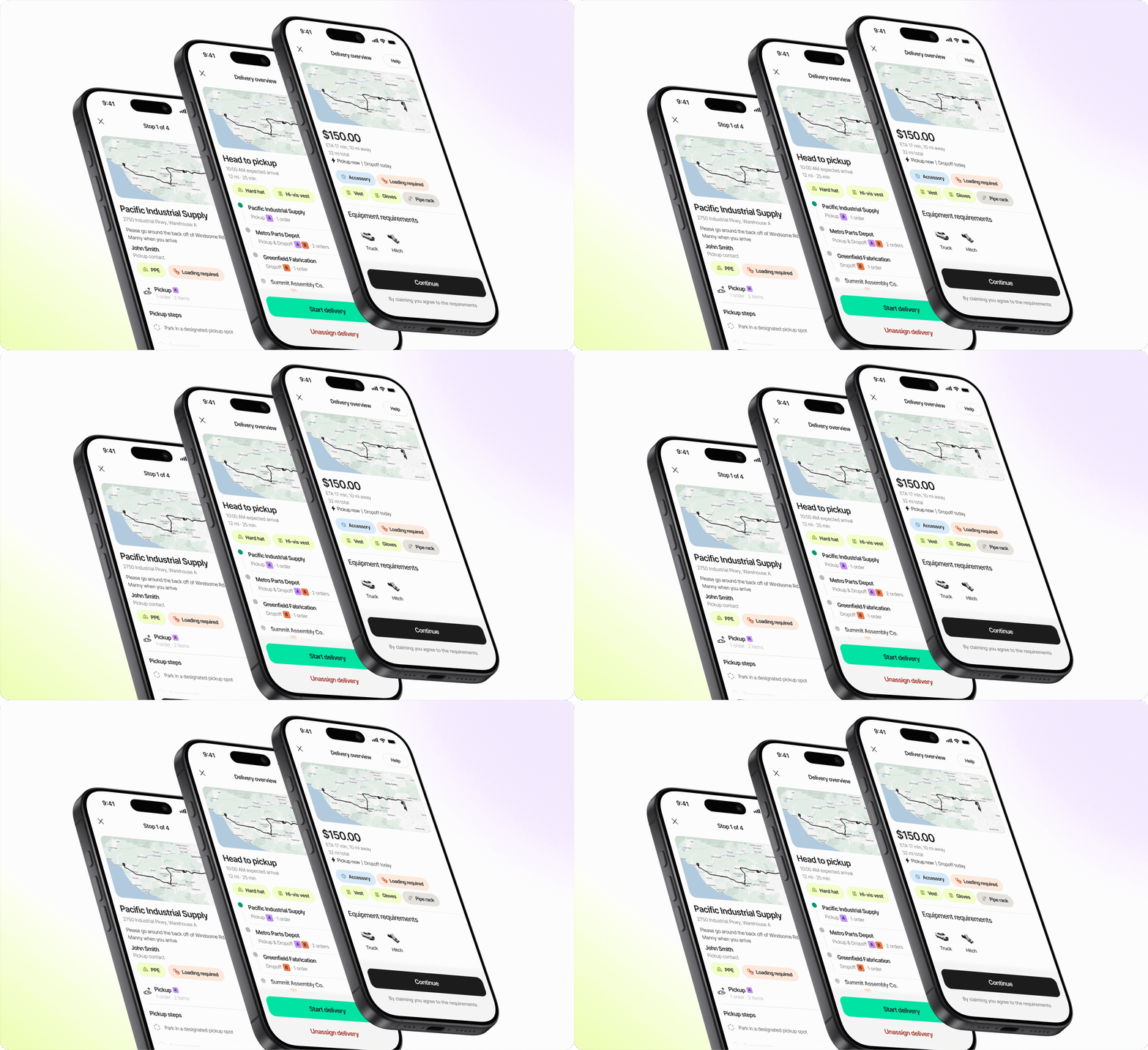
Curri is a comprehensive logistics platform that meets same-day fulfillment requirements, backed by a nationwide fleet of drivers. Curri’s route planner recently won Gartner’s Best Ease of Use 2026, because it’s intuitive for all. The route planner works with:
- Drag and drop: Users can simply drag and drop delivery points onto a driver’s route. The app handles the rest.
- The lasso tool: Users can also draw a simple loop around all drop-off points, and the app will calculate the most efficient path to all destinations.
- Auto-assign: This feature uses advanced AI to automatically build and simplify even the most complex routes. It runs scenarios to reduce vehicle usage, helping users lower their fleet size and save on operational costs.
And whether retailers run dedicated routes, use simple point A-to-B hotshots, or even FTL and LTL trucking, Curri supports it. Route Planner will dispatch any vehicle from a small van to a flatbed to complete the job as effectively as possible.
Kick off the right routing strategy with Curri
The most successful retail delivery logistics evaluate their real-world needs before committing to a solution. But for those looking to scale, meet customer expectations, and save time and money, a route planner is a no-brainer.
See a demo from the Curri team today to learn more. Getting started is simple, just like we know your next delivery will be.