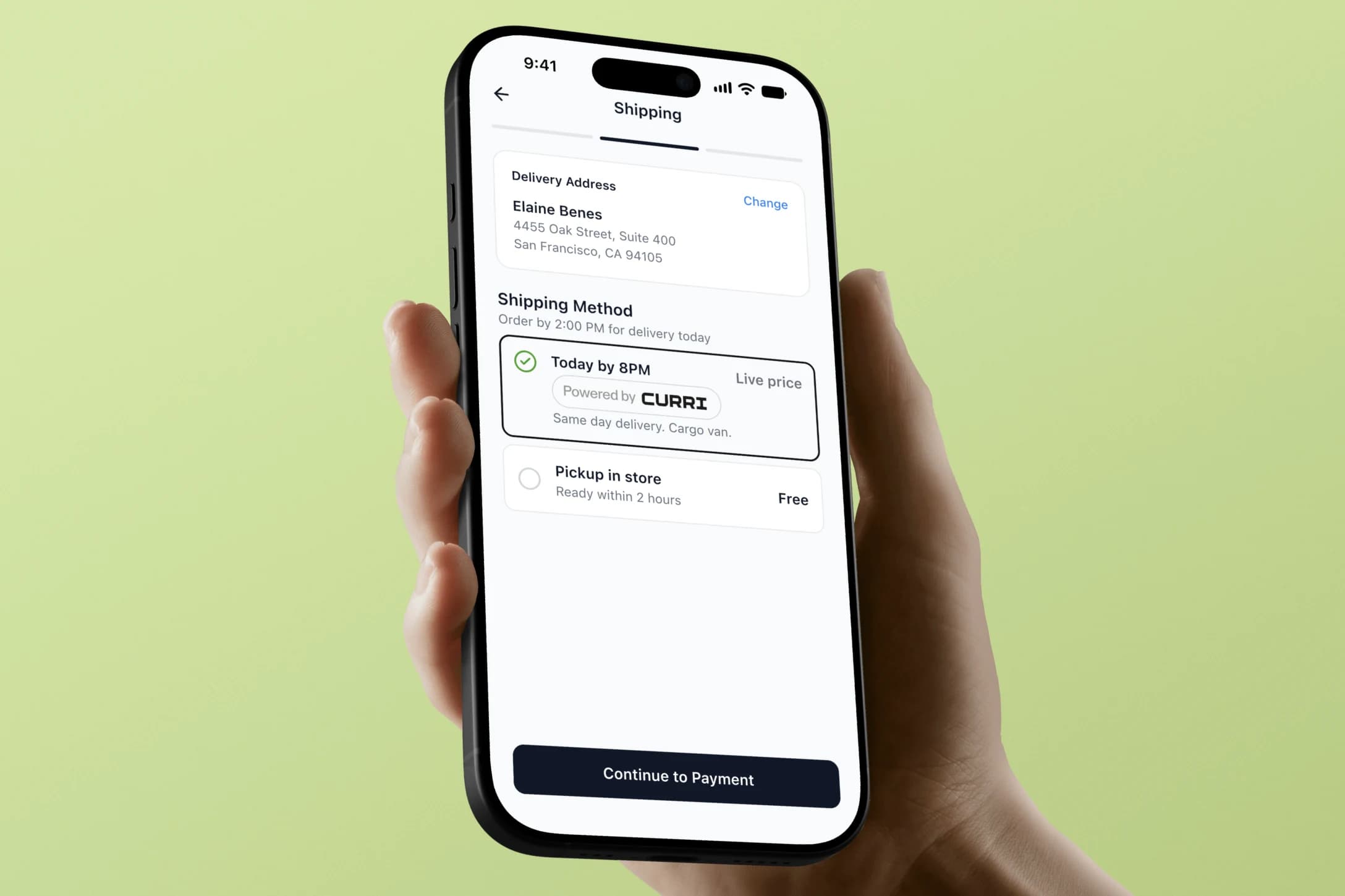
How Curri's platform matches retail shipments with the right vehicle type

As nice as it would be, not every delivery is the same. One box containing a phone charger headed to a nearby store is a fundamentally different logistics process than an oversized appliance being sent to a customer's home.
Yet many retail bookers and dispatchers treat every shipment the same way. Vehicles are assigned based on a first available, first used system, instead of by the best fit for the job. This results in wasted capacity, unnecessary costs, and a delivery experience that fails to meet customer expectations.
Curri was built around a more flexible principle. The right shipment deserves the right vehicle, matched based on a set of variables in real time. Here's why the match matters, and how it impacts operations and your bottom line.
Vehicle matching: What it is and why it matters in retail delivery
A single retailer in a given week might need to move small parcel deliveries, mid-sized freight, bulky or oversized products, and even temperature-sensitive items. Assigning the first available vehicle to any of these jobs might seem like the fastest way to get things done, but it creates a ripple effect of issues throughout the entire operation.
An oversized item loaded into a too-small vehicle, for example, cannot be safely operated. This puts the job at risk of failing to meet completion and compliance, and it could create liability exposure or potential damage. A small delivery transported in an extra-large freight vehicle wasted fuel and driver time that could have been better used at other stops.
Getting vehicle matching right shouldn't be complex nor a minor operational detail. The reality is, it's a core driver of efficiency, cost control, and delivery quality across retail fleets.
Why accessibility and variation in vehicle choice matter
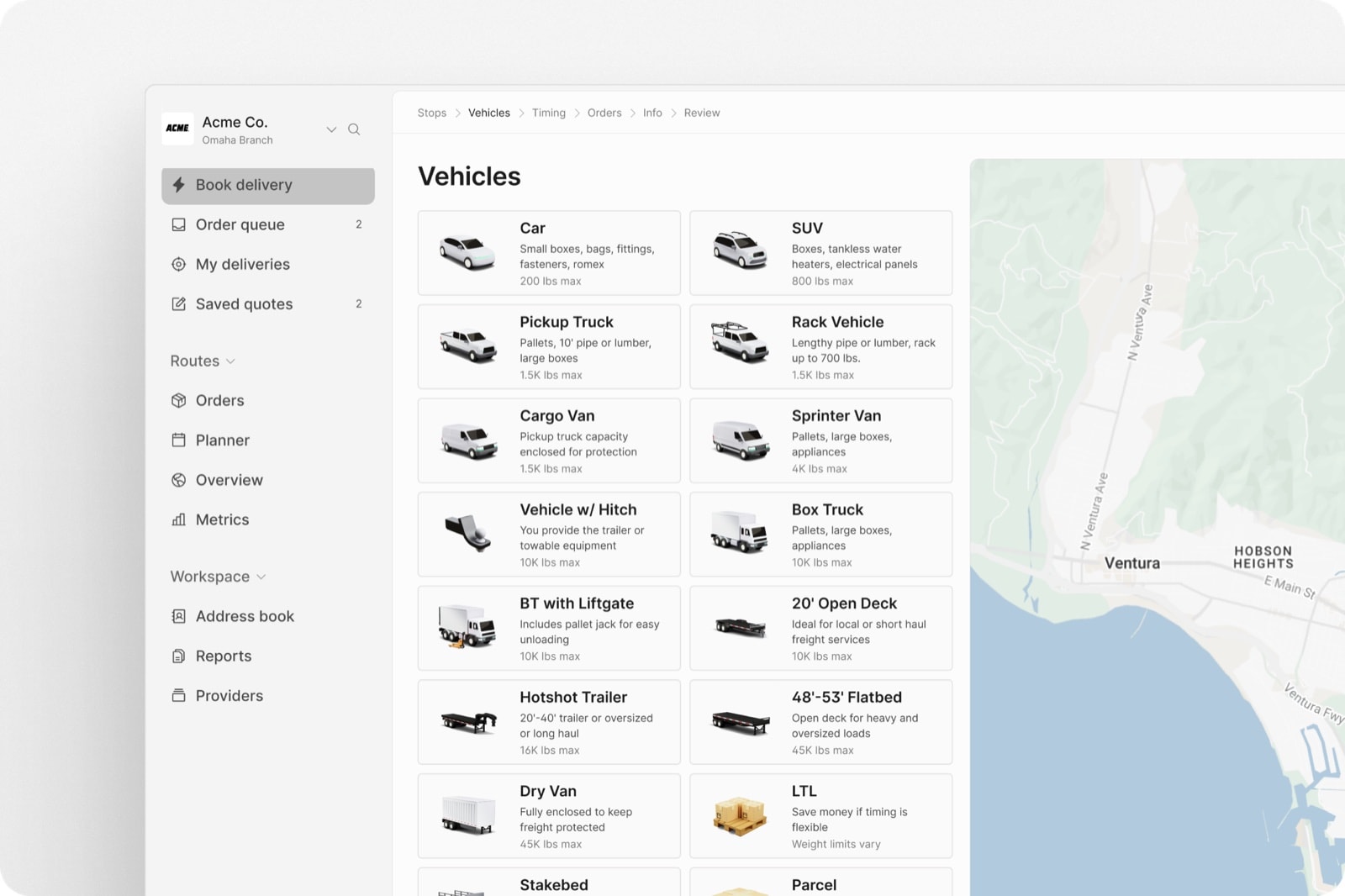
Curri's platform draws on a broad, nationwide network of drivers to get the match right every time. Retailers get access to everything from sedans to flatbed trucks, ensuring the right capacity for any type of retail shipment a growing business needs. Here's what certain popular vehicle types are best suited for:
- Cargo and sprinter vans: The workhorses of retail van fleet operations, these vehicles handle common mid-sized deliveries with ease. They can navigate urban and suburban routes with precision and flexibility, and they are often the right fit for small, high-frequency, multi-stop delivery patterns that retail last-mile logistics often call for. For retailers running ship-from-store fulfillment models, cargo vans are typically the primary vehicle in rotation.
- Pickup trucks: A classic pickup offers a practical solution for kind-of-bulky or irregularly shaped items that don't require enclosed freight capacity. They provide a little more room than a standard van, making building materials, home improvement products, and hardware a great match.
- Box trucks: Box trucks step up to the plate when volume or weight exceeds more than what a cargo van can carry. These vehicles are well-suited for larger retail replenishment runs, furniture delivery, or commercial shipments where the load size would otherwise require multiple van trips. Using box trucks when it's warranted reduces the total number of vehicles on the road and brings down the cost per unit delivered.
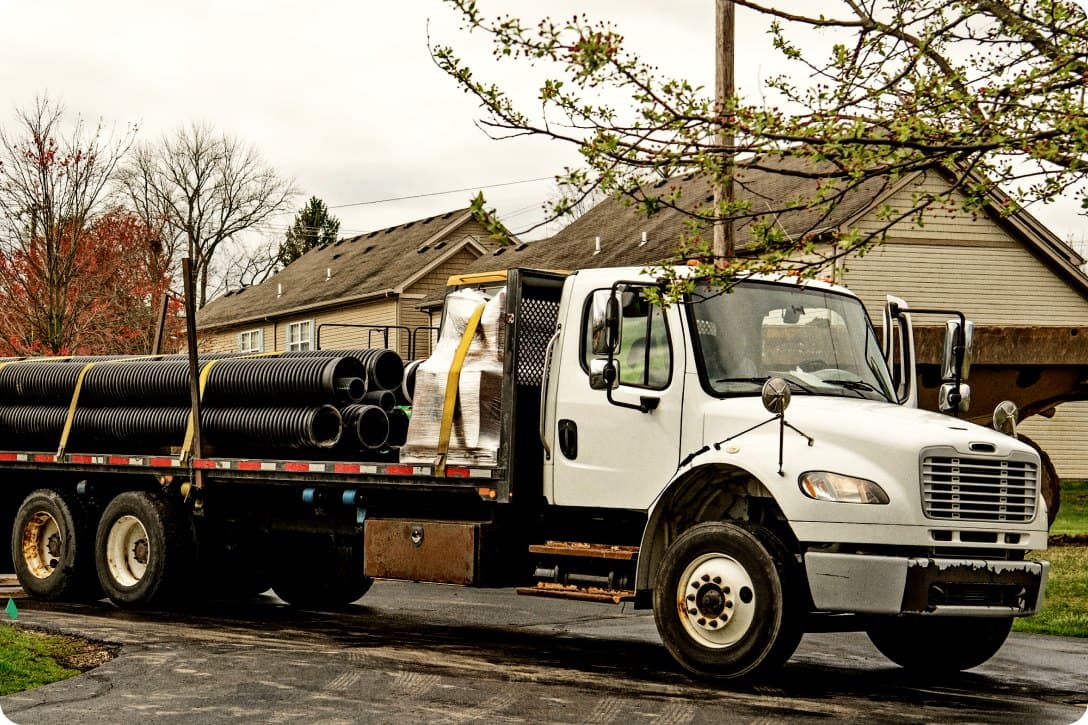
- Flatbed trucks: The biggest of the big delivery trucks, flatbeds handle the shipments that the other vehicles simply cannot. For extra-large bulky items, modular construction parts, and anything else oversized and headed to a warehouse, a flatbed is going to be the go-to choice.
Climate-controlled trucks and other vehicles for specialty deliveries should also be added to the fold when appropriate. But adding a diverse range of vehicles to an internal fleet is a huge time, money, and hiring investment. That's why more and more retailers are choosing third-party partners to supplement the resources already on hand.
Making the match easy with Curri
The intelligence behind Curri's vehicle matching makes an internal lookup table a tool of the past. When a retailer submits a booking through the platform, Curri evaluates a set of logistics variables simultaneously. Shipment dimensions, weight, dropoff location, route complexity, delivery window, vehicle availability, and even traffic forecast are all analyzed in real time before a match is made.
And it's all behind the scenes. Curri takes the decision weight off of the booker, so they can spare the cognitive load and get back to bigger-picture tasks. The speed and ease of this process matter greatly in retail supply chain logistics, where demand is rarely predictable, and the window between order and delivery continues to shrink.
The cost-effectiveness model retailers need
The matching logic also boosts cost-effectiveness. Sending a box truck to handle something a cargo van could take on isn't just unnecessary, it's a margin problem. Curri's platform optimizes across vehicle fit and cost at once, so retailers aren't overpaying for the space they won't use.
For those managing internal fleets alongside Curri's on-demand capacity, the platform integrates both into a unified dispatch view. Owned vehicles and Curri vehicles are coordinated through a single interface, making management and scaling easier than ever.
These gains compound quickly for retailers managing high shipment volumes across varied product categories. The cumulative effect of consistently better vehicle matching is a retail supply chain that performs reliably, costs less to manage, shrinks the company's carbon footprint, and builds stronger customer relationships over time.
A smarter approach to retail delivery with Curri
Modern retail delivery is only getting more complex thanks to rising customer expectations, demand surges, and a deliver-now market. Retailers need delivery software intelligent enough to evaluate every shipment on the right terms and match vehicles that get the work done most effectively.
Curri's vehicle matching capabilities blend ease of use, AI tech, and the cost efficiency retailers are looking for. Bookers gain access to a nationwide fleet, a wide range of vehicles, and multiple delivery types, from LTLs to dedicated service to hotshots.
Get a demo with the Curri team today, and discover how simple vehicle matching and the whole supply chain can be.