Delivery without an address: How pinpoint delivery works


Some deliveries don't have an address to send them to. A new subdivision that isn't in any mapping database yet, a solar array at the end of three miles of dirt road, a laydown yard in the middle of an open field. You can still get materials there. Curri lets you drop a pin on the exact spot, and a local driver navigates straight to those coordinates, no street address required.
That capability is called pinpoint delivery, and it's how you book a delivery without an address. Pinpoint delivery (also called pin drop or GPS coordinate delivery) is when you mark the drop location with a pin, latitude and longitude, instead of typing an address. The driver gets routed to the exact point you set, not the nearest address the map can guess at.
What does it mean to deliver without an address?
Delivering without an address means the drop location is defined by a point on a map rather than a mailing address. Instead of "214 Larkspur Ave," you place a pin on the gate, the trailer, or the corner of the lot where the crew actually wants the material.
This matters because a street address is really just a label pointing at a set of coordinates. When the label doesn't exist yet, or points to the wrong entrance, the coordinates still do. Pinpoint delivery skips the label and sends the driver to the spot itself.
That's a different problem than consumer delivery apps solve for. The load here is heavy, time-sensitive, and headed to a jobsite, not a doorstep, and it has to get there the same day.
Why so many jobsites don't have a street address
Most address gaps show up in exactly the places distributors deliver to every day. The address either doesn't exist yet, doesn't resolve correctly, or points to the wrong part of a large site.
- New construction and new subdivisions that mapping databases haven't caught up to
- Rural and remote sites reached by unnamed access roads, including solar, energy, and infrastructure work
- Large sites where one address covers dozens of acres and the crew is nowhere near the front gate
- Staging areas, laydown yards, and temporary entrances that were never assigned an address
In each case, typing an address either fails or drops the driver in the wrong place. A pin removes the guesswork.
How pinpoint delivery works with Curri
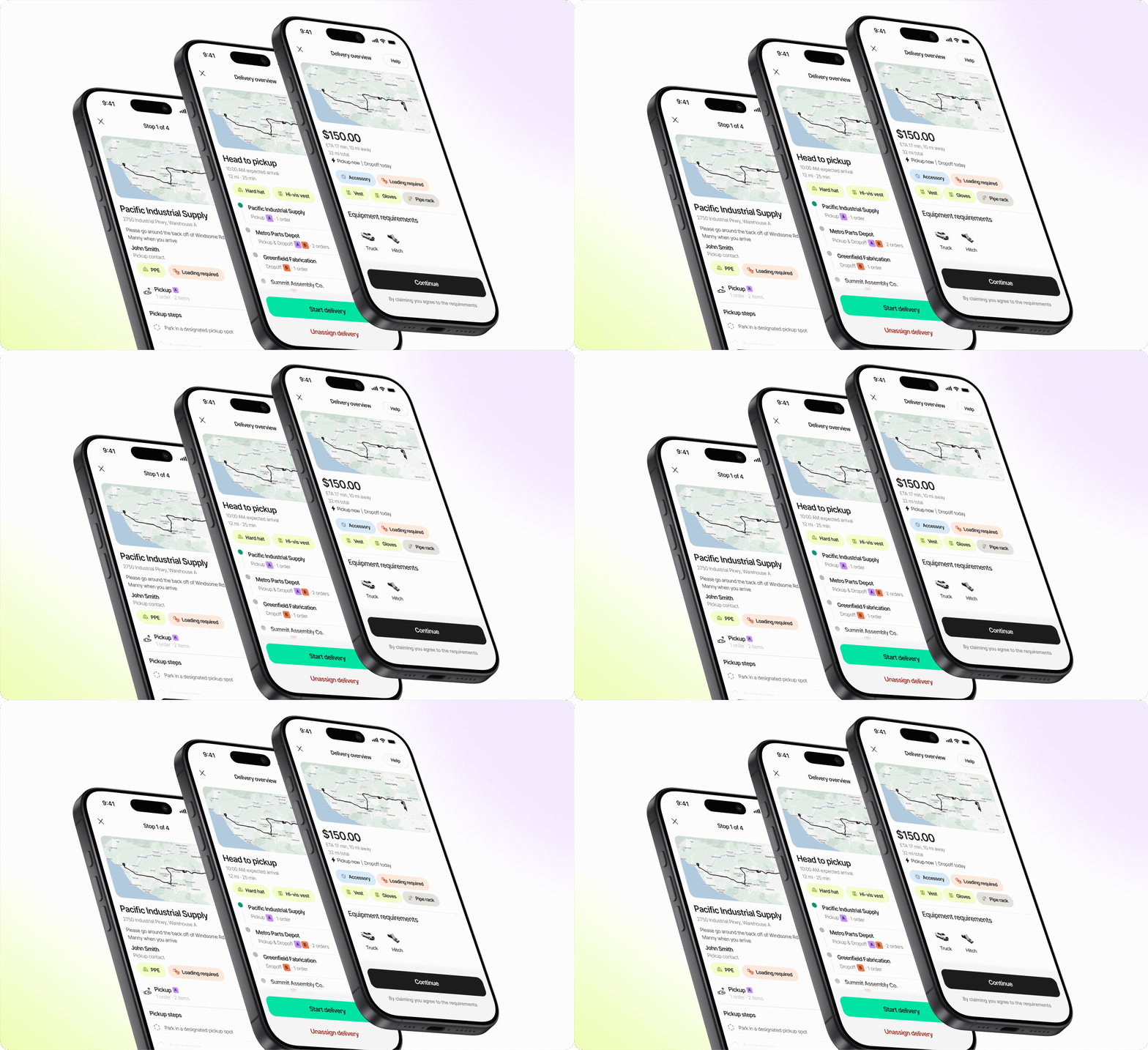
Booking a delivery to a pin works the same as any other Curri delivery. You set the drop as a point on the map instead of an address, and the rest of the flow doesn't change.
Set the drop as a pin
When you enter your stops, place the destination pin on the exact spot on the map. Curri holds those coordinates as the drop location, so the driver isn't relying on an address to snap to.
The driver navigates to the coordinates
A local Hotshots driver picks up your load and navigates to the point you set. Local drivers already know the back roads, the gates, and the access points that a mapping app doesn't, which is what gets a delivery the last few hundred yards to the crew.
You track it the whole way
You watch the delivery move in real time and get proof of delivery when it lands, with a photo of exactly where the driver dropped it. No calling around to find out whether the material made it to the right corner of the site.
If you're weighing how to handle deliveries to sites that don't map cleanly, request a demo and we'll walk through how other distributors are getting materials to hard-to-find drops.
What to include so the driver finds the exact spot
A pin gets the driver to the right coordinates. A few details get the load to the right hands once they're on site. Add these when you book so the last stretch goes smoothly.
- An on-site contact name and phone number the driver can call on arrival
- Gate codes, access instructions, or which entrance to use
- A note on where to set the material, the trailer, the north gate, the second lot
- A photo of the drop area if you have one, so the driver knows it on sight
The pin does the navigation. The details do the handoff. Together they turn a location that isn't on the map into a delivery that shows up where the crew is standing.
When to use a pin instead of an address
Use a pin any time the address is missing, wrong, or too broad to be useful. If a jobsite is new, remote, or spread across a large footprint, the pin is more reliable than the address every time.
For sites that do have a working address, typing it is still fine. Pinpoint delivery is the tool for everywhere else, and it's a big reason same-day jobsite delivery actually reaches the jobsite instead of the nearest place the map recognizes.
Get your materials to the exact spot.
See how Curri delivers to a dropped pin when the jobsite isn't on the map yet.