Big and bulky delivery: The last-mile category to watch

Big and bulky delivery covers the freight that can't fit in a parcel van: furniture, appliances, construction materials, and industrial machinery moved from a warehouse to a final destination. It's one of the fastest-growing categories in last-mile delivery, and no single vehicle type can cover all of it.
That's why Curri runs on a nationwide carrier network of over 33,000 DOT-regulated independent carriers, built to match each shipment's size to the right vehicle.
What counts as a big and bulky delivery?
Big and bulky last-mile delivery covers any shipment too large, heavy, or awkward for standard parcel carriers to handle. It's grouped into a handful of categories: furniture and mattresses, appliances, electronics and high-tech equipment, exercise equipment, construction materials, industrial machinery, and medical equipment.
Curri moves lumber, roofing materials, HVAC units, electrical panels, and heavy equipment every day, none of which ships like a standard parcel. Last-mile delivery for construction materials doesn't look like delivering a mattress or a refrigerator. A single order might combine a pallet of shingles, a load of drywall, and a stack of concrete blocks, headed to a jobsite that doesn't have a loading dock. Industrial supply delivery carries the same complications: a pallet of bearings and fittings sitting next to a compressor that needs a liftgate. The category isn't defined by any one item. It's defined by shipments too large, too heavy, or too awkward for a standard parcel carrier to handle, whether that's a single oddly shaped length of pipe or a 45,000-pound pallet.
Why big and bulky delivery takes more than one vehicle type
A single big and bulky order can range from a bundle of pipe that needs a rack vehicle to a 45,000-pound pallet that needs a flatbed. That range is the defining feature of the category, and it's why a delivery network built around one vehicle type falls short fast.
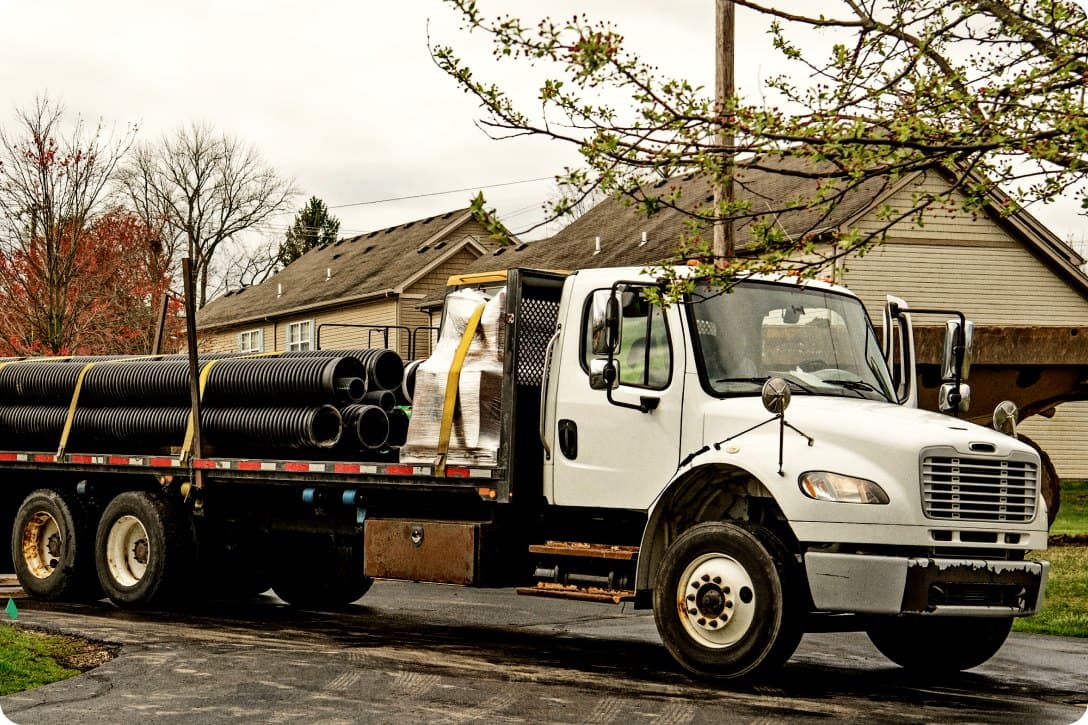
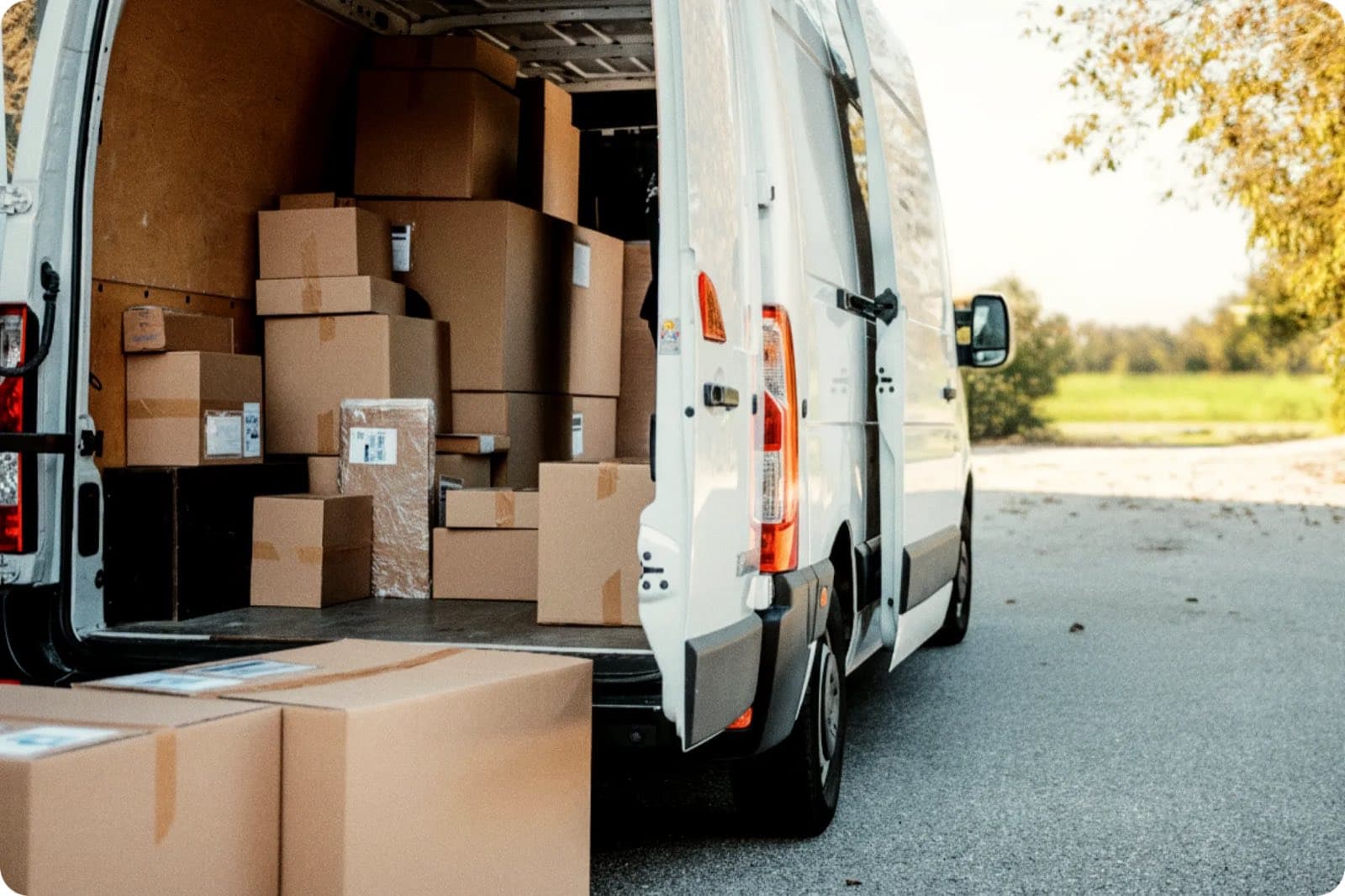
Curri's platform spans the full range of vehicles needed to move any load. Pickup trucks and rack vehicles handle pipe and lumber. Cargo and sprinter vans carry palletized loads and appliances. Box trucks and liftgate trucks take freight that needs easy loading and unloading. Hotshot trailers, open decks, and 48- to 53-foot flatbeds cover oversized or heavy freight.
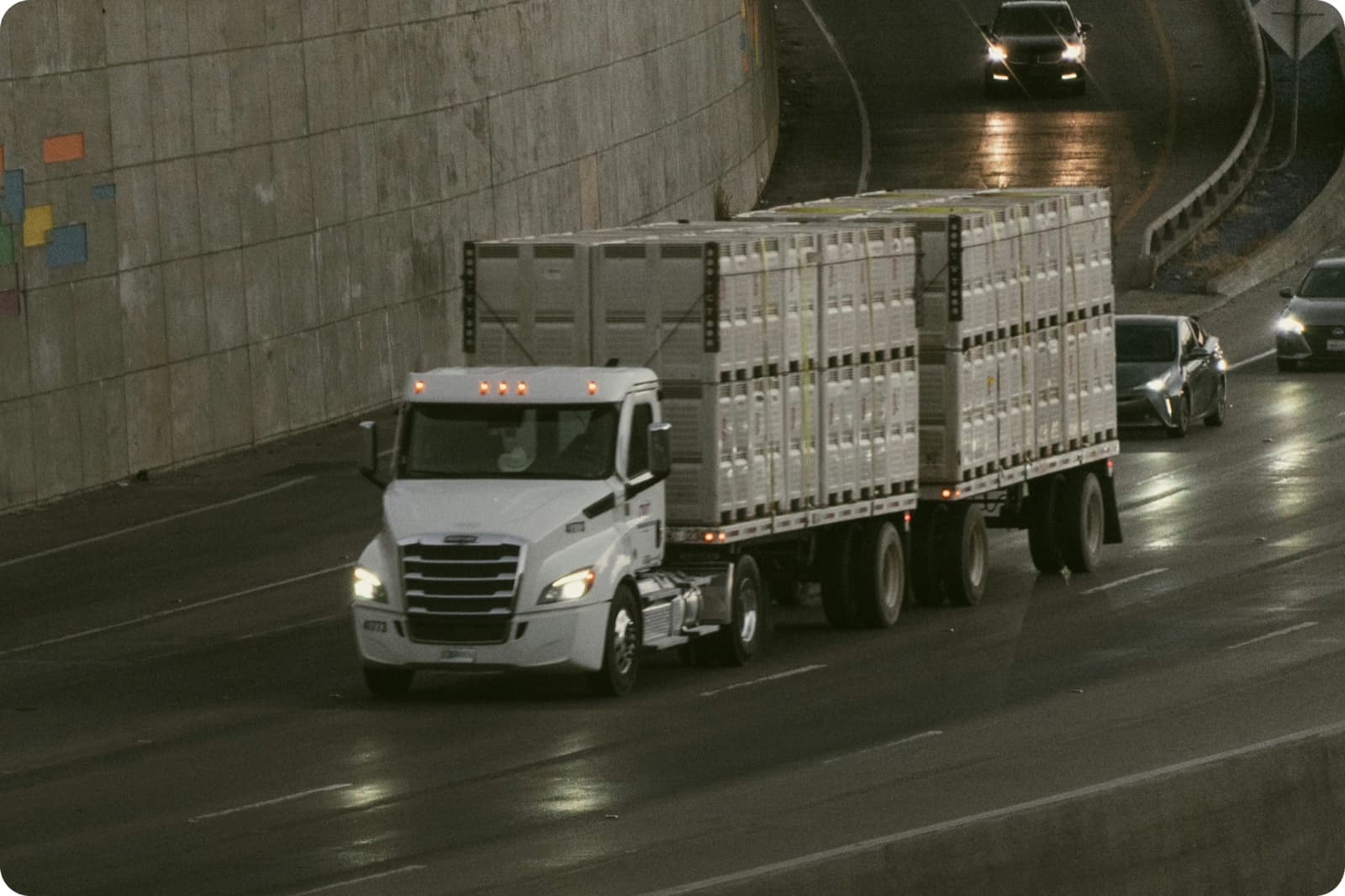
Oversized freight delivery adds its own layer on top of that range. A 48-foot flatbed load of steel beams or modular equipment isn't just a bigger version of a smaller shipment: it needs a carrier already equipped for that size and weight class, not a truck stretched past what it's built for. Treating an oversized load like a slightly larger standard delivery is how loads get turned away at a jobsite that can't accommodate the trailer length.
Matching the vehicle to the load, not the other way around
Distributors don't get to pick which size an order comes in next. A network built only for pallets can't help with a rush order for a bundle of pipe, and a network built for small parcels can't move a flatbed load. Covering the category means covering the whole range, not just the smallest part of it.
A nationwide network built for scale
Curri connects distributors to a nationwide carrier network of over 33,000 DOT-regulated independent carriers across the country. That scale is what makes it possible to match a specific load, in a specific market, to the right vehicle instantly.
That density matters as much as the total count. A distributor in a mid-size metro needs the same range of vehicle types as one in a major market, just from a thinner pool of local carriers. Curri's carrier network spans both, so a branch in a smaller market isn't limited to whichever two or three trucks happen to be available that day.
Why big and bulky delivery doesn't behave like parcel delivery
Damage claims on building supplies run meaningfully higher than standard parcel freight, because drywall, roofing panels, and windows don't tolerate rough handling the way a cardboard box does. That's part of why every Curri delivery is backed by up to $250,000 in cargo insurance per load, coverage sized for freight where a single mishandled shipment costs far more than a lost or damaged parcel.
Add in remote or hard-to-access jobsites, specialized equipment requirements, and unloading time that a standard delivery route never has to account for, and you get a category that needs its own playbook. A single vehicle type and a one-size routing model don't cut it.
Big and bulky shipments also change who has to be involved at the delivery end. A parcel gets left on a porch. A 300-pound HVAC unit or a bundle of lumber needs a driver who can safely maneuver it off a liftgate, sometimes with a second person on-site to help carry it in. Skipping that step is how damage claims go up on the same delivery.
What this means for choosing a delivery partner
A single branch might need a same-day rush order for a jobsite emergency, a palletized LTL (less-than-truckload) shipment for a bulk order, and a recurring dedicated route between a warehouse and regular customers, all in the same week. The distributors who handle that well have picked a delivery partner that flexes across load types, vehicle sizes, and timelines without forcing every shipment into the same box.
A distributor working in building materials doesn't need three different vendors to cover three different load types, and doesn't need to know in advance which truck a given order will need.
If your branch is juggling rush orders, palletized shipments, and recurring routes without a network that can flex to match, get a demo to see how it works across load types on one platform.
For more on what slows big and bulky freight down between the warehouse and the jobsite, see Curri's guide to the most common causes of jobsite material delays and the breakdown of what actually drives hotshot delivery cost.
Move big and bulky freight without the guesswork
See how Curri's nationwide network matches every load, from a single hotshot rush order to a full flatbed, with the right vehicle and driver.