Hazmat LTL shipping: What distributors need to know


Hazmat LTL shipping is how most distributors move hazardous materials safely and affordably. LTL, short for less-than-truckload, lets you send a few pallets of flammable, corrosive, or otherwise regulated freight alongside other shipments instead of paying for a whole trailer. To do it right, you need three things: UN-spec packaging, a hazmat Bill of Lading, and a carrier certified to haul the hazard class you're shipping. Get those in place and a pallet of paint, adhesive, or industrial chemicals reaches the jobsite on time and in full compliance. Regulated freight has a lane built for it, and LTL is where it belongs by default.
What counts as hazmat freight?
Hazardous materials, or hazmat, are any goods the U.S. Department of Transportation (DOT) regulates because they pose a risk in transit. DOT sorts them into nine hazard classes, and distributors run into a handful of them every week without always thinking of them as hazmat.
The classes that show up most on a distributor's dock:
- Class 3, flammable liquids: paints, solvents, adhesives, and coatings.
- Class 2, gases: propane cylinders, refrigerant, and aerosols.
- Class 8, corrosives: batteries, cleaning acids, and pool chemicals.
- Class 9, miscellaneous: lithium batteries and other regulated goods.
If a product carries a UN number, a hazard class, and a packing group, it ships as hazmat. A UN number is the four-digit code that identifies the exact substance, listed on its Safety Data Sheet. The packing group (I, II, or III) rates how severe the danger is. That's true whether you're sending a single pallet of sealant or a full stack of chemicals to a building materials branch across the state.
What you need to ship hazmat via LTL
Three requirements turn a regulated pallet into a legal shipment: the right packaging, the right paperwork, and the right carrier. Miss one and the load stops at the dock.
UN-spec packaging
All hazmat ships in UN-specification packaging, which is tested and certified for a specific hazard class and packing group. This isn't a standard cardboard box. The packaging is rated to contain the material if it's dropped, stacked, or jostled in transit, and the rating has to match what's inside.
A hazmat Bill of Lading
Every hazmat shipment needs a specially formatted Bill of Lading that lists the proper shipping name, hazard class, UN number, packing group, quantity, and a 24/7 emergency response contact. Writing the hazmat Bill of Lading is always the shipper's responsibility, not the carrier's. That paperwork is what keeps the driver, the dock crew, and first responders informed about exactly what's on the truck.
A certified carrier
Hazmat has to move with a driver trained and certified to haul it, on a carrier with spill protocols and segregation rules already in place. The stakes are real: federal penalties for non-compliant hazmat shipping run up to $99,756 per violation, and up to $232,762 when a violation causes death, serious injury, or substantial property damage (PHMSA's 2025 civil penalty rule). Matching the load to a properly certified carrier is the step most likely to trip up a busy branch.
Why LTL is the right lane for hazardous freight
LTL is built for the structure hazmat demands. Scheduled freight gives you time to package correctly, generate the Bill of Lading, and match the load to a certified carrier, all before the truck arrives. Same-day scrambles don't leave room for that.
The economics work too. Because LTL shares trailer space across shippers, you move a few regulated pallets without paying for a whole trailer. That's the point of less-than-truckload freight, and it's why a pallet of adhesive or a partial load of chemicals fits the model so well. Your regulated stock reaches the branch or jobsite that needs it, on a schedule you can plan around.
What about same-day hazmat?
Planned hazardous loads belong on LTL, and here's why. On-demand delivery for hazmat isn't a standard booking path, because moving regulated freight on short notice depends on having a certified driver available in that exact market at that exact moment. When a rush hazmat need does come up, it's handled case by case, with the team sourcing a driver who carries the right certification for that hazard class.
For everything you can see coming, LTL is the reliable answer. If you're figuring out how to move regulated freight this season, you can request a demo to see how other distributors handle hazmat LTL. For a rush order that isn't hazmat, Curri's Hotshots gets a driver moving the moment the order comes in.
How Curri handles hazmat LTL for your branch
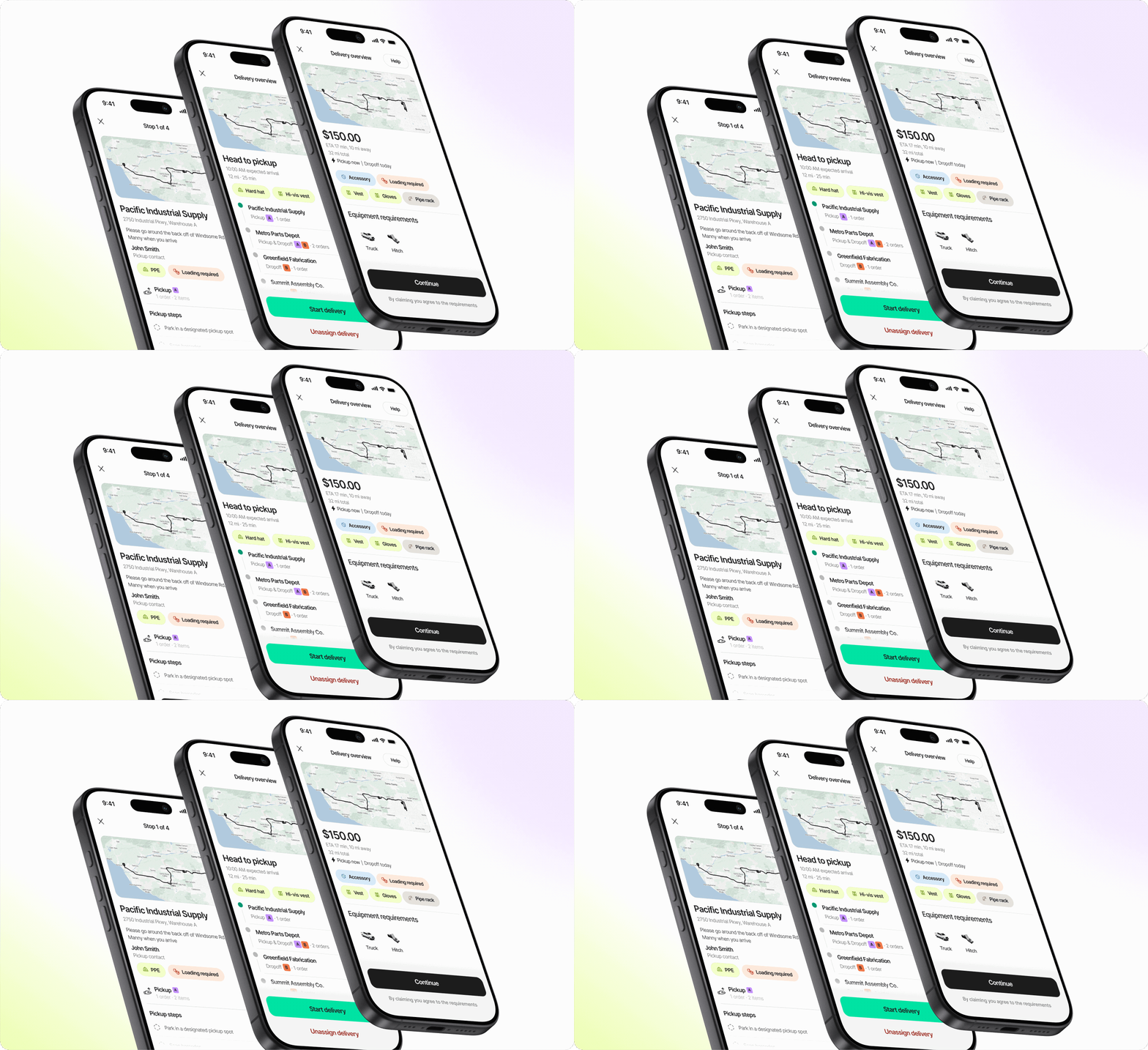
You book the load as LTL and flag it as hazardous right in the booking form, entering the UN number, hazard class, packing group, proper shipping name, and a 24/7 emergency response contact, such as Chemtrec. From there Curri matches the load to a carrier in its network certified for that hazard class and tracks the shipment with a digital proof trail from pickup to delivery. Nobody at the branch is left calling around to find a driver who can legally take the load.
The distributors who lean on Curri most already run their own drivers. Curri shows up for the loads their fleet can't take: regulated freight that needs a certified carrier, overflow volume during a busy stretch, and routes outside their normal coverage. That's the case across HVAC, plumbing, and electrical supply, where a flammable or corrosive pallet can't wait on a guess about who's available.
Move regulated freight without the guesswork
See how Curri matches your hazmat loads to certified carriers, with a digital proof trail from pickup to delivery.